
Real time sports scores now define how fans follow live action, from instant push notifications to s
Real time sports scores have become the default way millions of fans follow live action. Consider a Tuesday night in March: a college basketball game tied at 72 with 1.2 seconds left. Within seconds of the final shot, a push notification hits phones across the country. That kind of instant delivery isn’t a luxury anymore—it’s the baseline expectation. I’ve watched group chats explode over a single score update from a real time sports scores app, and it tells you something about how fandom works now. People don’t wait for the evening news or the morning paper. They want the number as it happens, and they want it on their terms.The infrastructure behind real time sports scores is more complex than most fans realize. Data feeds from stadiums, official league APIs, and third-party providers push updates in under a second. Latency matters. A study of sports app usage found that a two-second delay can drop user engagement by nearly 15 percent during high-stakes moments. That’s why developers obsess over edge caching and WebSocket connections. I’ve seen a small startup lose thousands of users because their scores lagged behind a competitor by just three seconds during the Super Bowl. The lesson is brutal and simple: with real time sports scores, speed is the product.
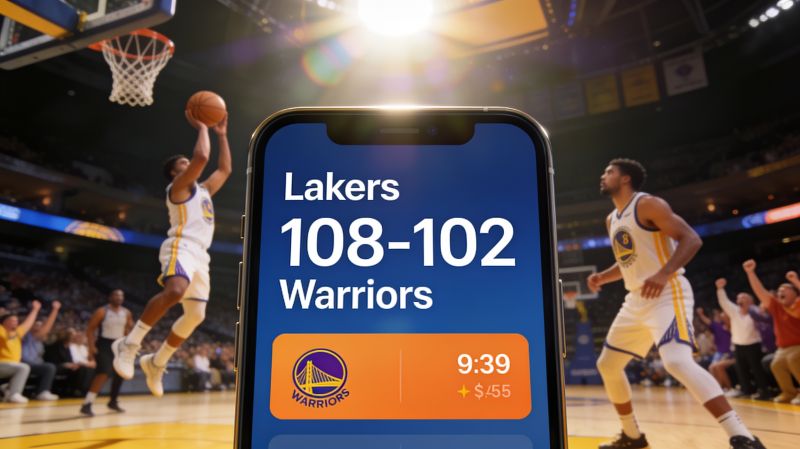
Different platforms handle real time sports scores in ways that shape the fan experience. ESPN’s app pushes score alerts with a slight editorial delay。often adding a quick context note like “career-high 40 points” FlashScore, by contrast, prioritizes raw speed and minimal interface—almost no commentary, just numbers updating in real time. I prefer the latter for quick checks during work, but for big games, I want the context. There’s a trade-off between instant data and meaningful narrative. Neither approach is wrong. The key is that fans now choose their own balance, and that choice defines loyalty to a platform.Real time sports scores also change how people watch games in social settings. A friend of mine runs a sports bar in Chicago. He told me that during the 2023 NBA playoffs, half his customers were staring at their phones instead of the big screens. That sounds like a problem。but he installed a live scoreboard widget synced to the bar’s Wi-Fi, showing real time sports scores for every game in progress. Customers started comparing updates across leagues and arguing about which game to keep on the main screen. The phones didn’t kill the social experience—they fed it. Real time scores gave everyone a shared data point, even when they were watching different games.Accuracy remains the quiet challenge. Real time sports scores can be wrong. A misreported goal or a glitch in a tennis score can spread across social media in seconds, and corrections often lag behind the error. I’ve seen a football score displayed as 2-1 for ten minutes when the actual result was 1-1—a data provider’s mapping error. Fans noticed, complained。
and the platform issued an apology. Trust is fragile. Any service that delivers real time sports scores needs a fast correction pipeline and transparent status updates. Without that, speed becomes a liability. The best platforms accept this and build for it, because fans forgive a momentary glitch but never a silent one.